Interlocking zinc wall panels
- Facade
- Clips
- Hidden
- Reveal
- Interlocking panel
Advantages
General advantages of Zinc
General information
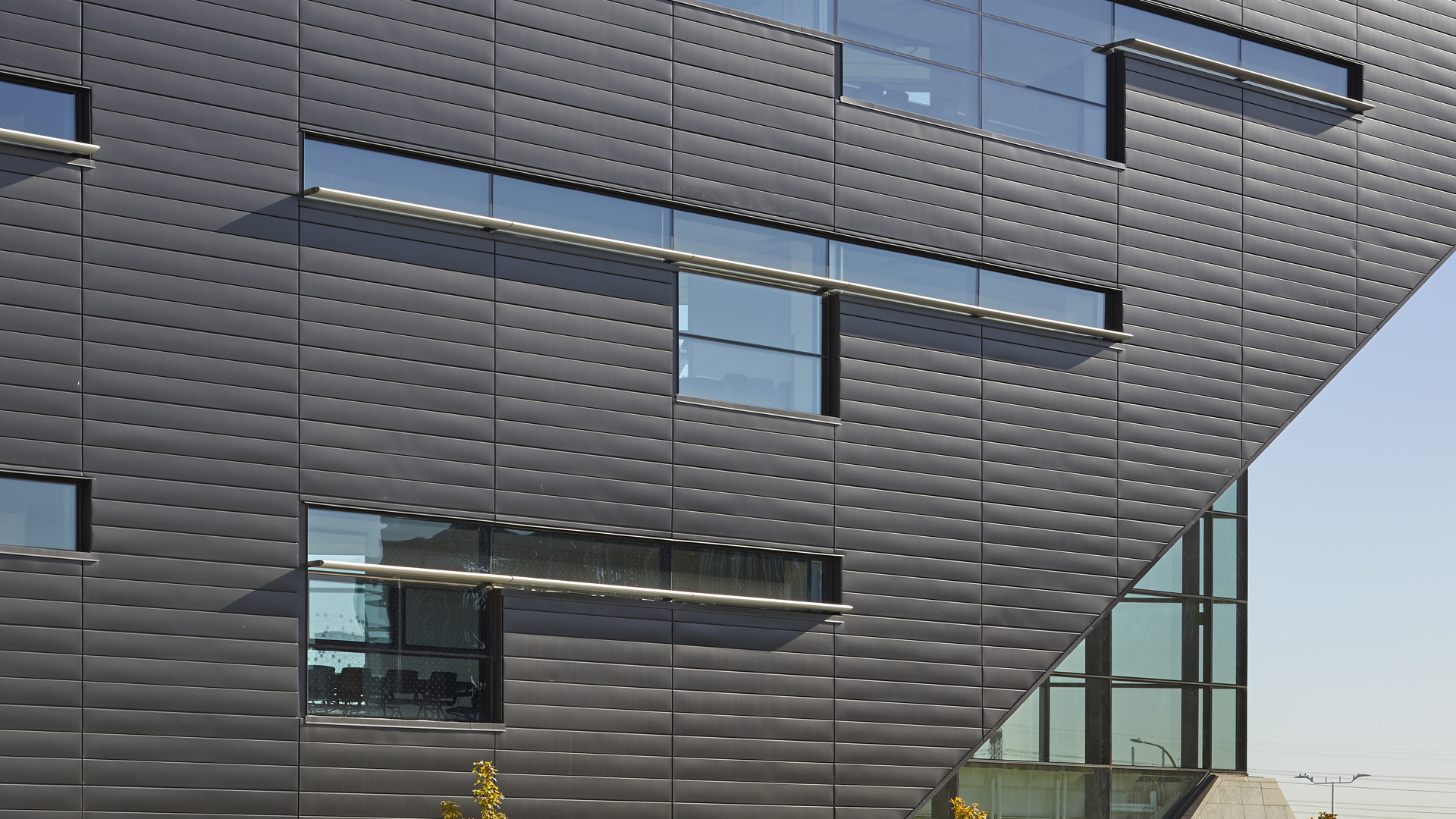
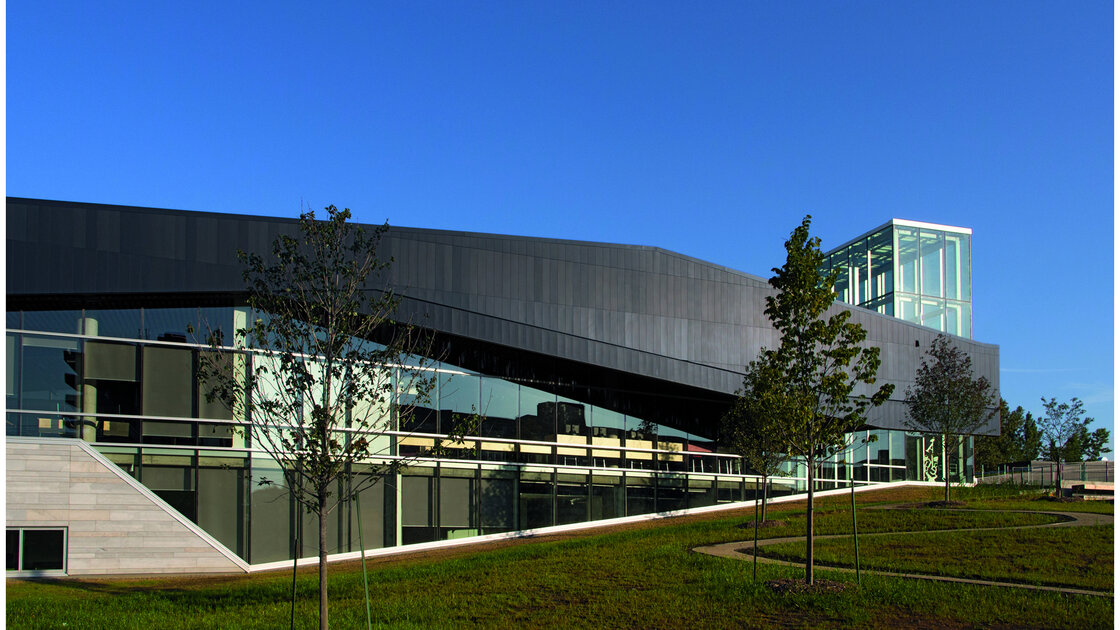
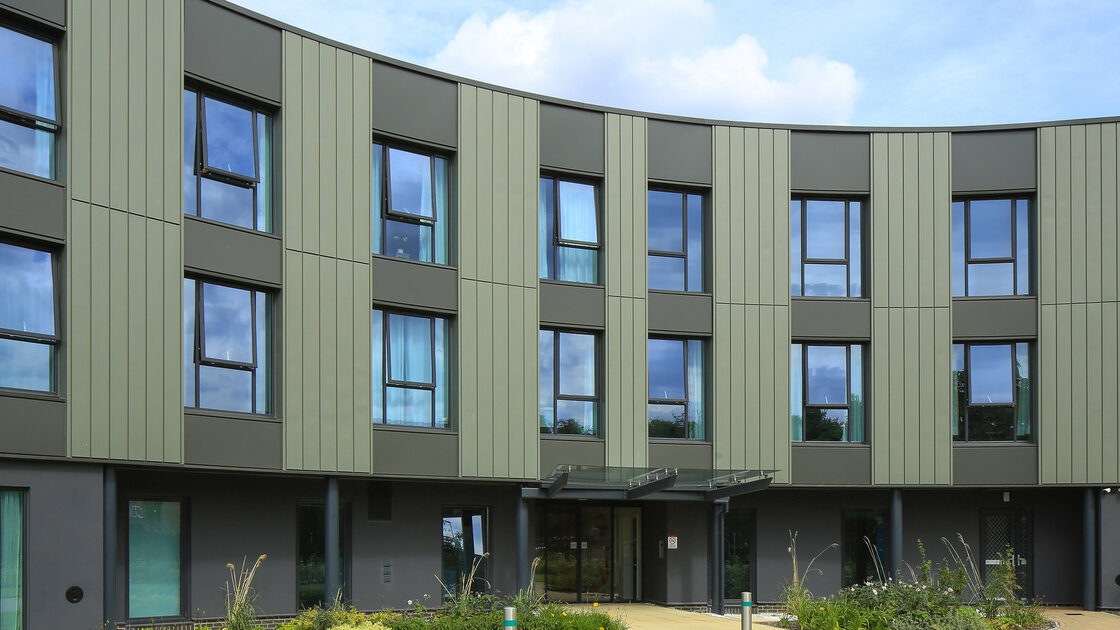
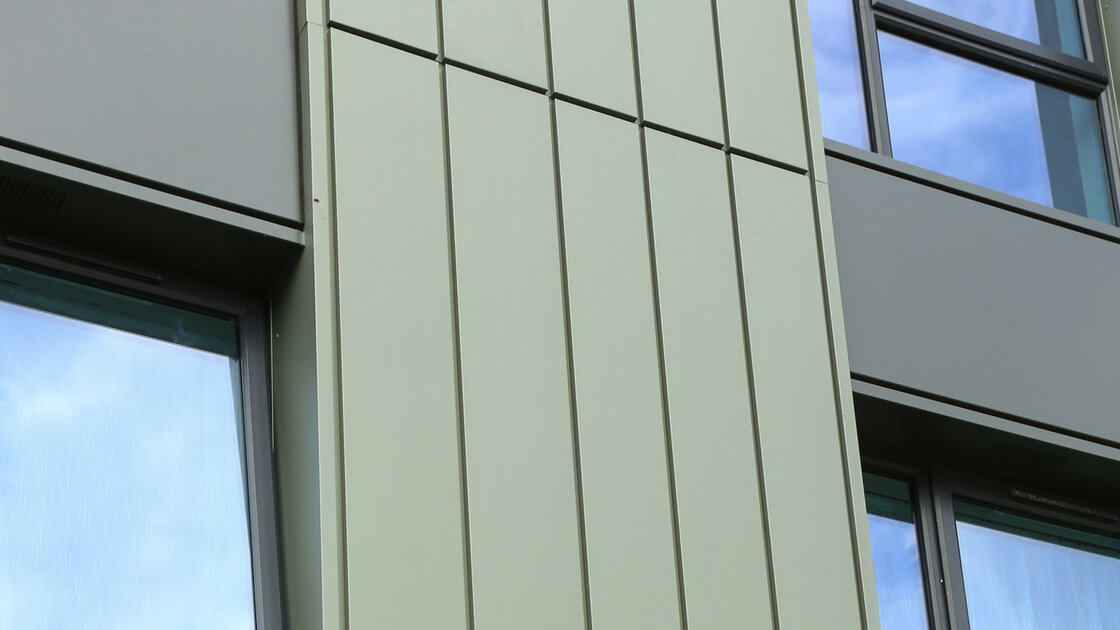
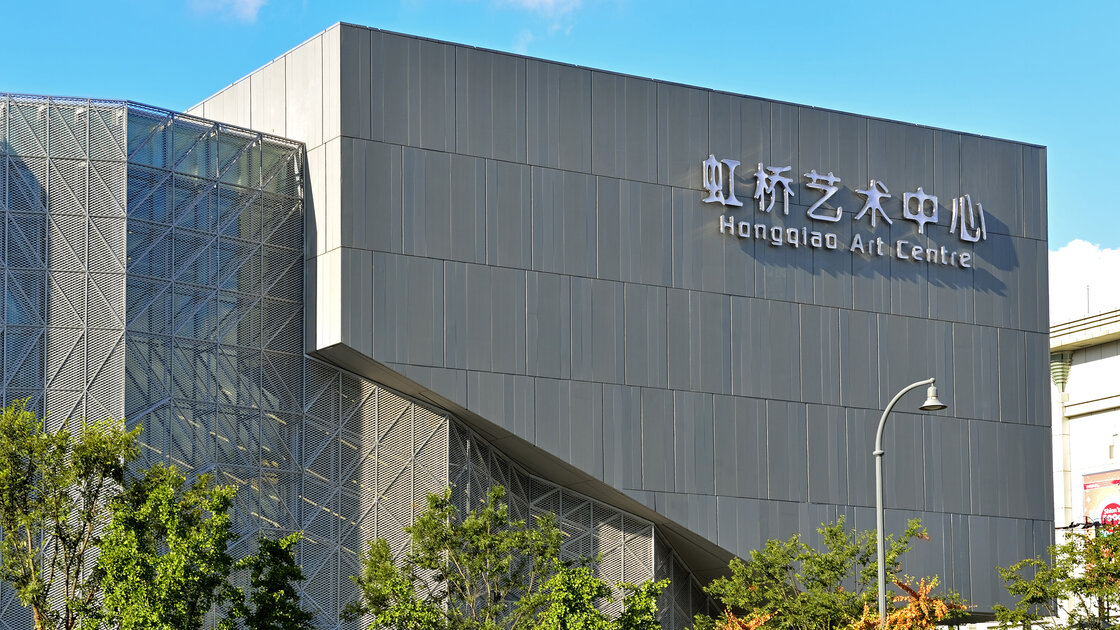
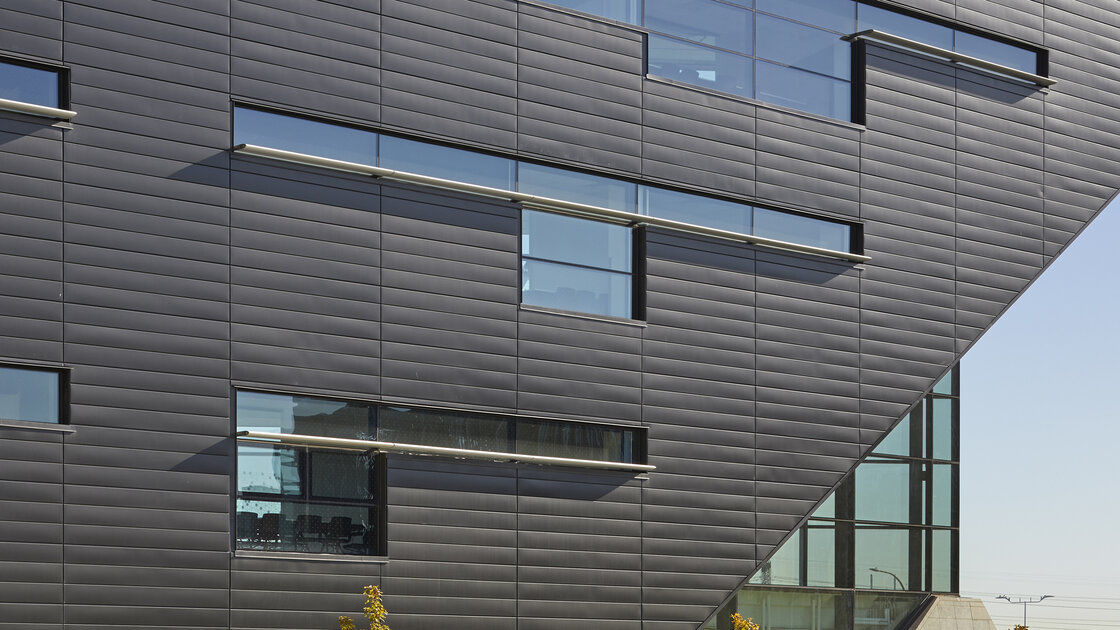
Interlocking zinc wall panels are the VMZINC rainscreen cladding system for new and refurbished facades. The 0.8 mm or 1 mm zinc panels, up to 3 m long, engage along an interlocking groove that creates a crisp recessed joint. They are fixed with screws or clips to a galvanised steel or aluminium rail framework set every 600 mm on the main structure, and can be perforated. The system works on masonry and metal structures alike and is part of the full range of VMZINC zinc facade and cladding systems.
Technical data
Key technical data of VMZINC interlocking zinc wall panels:
| Property | Value |
|---|---|
| Thickness | 0.8 mm & 1 mm |
| Standard centre to centre | 150 mm 220 mm 300 mm |
| Maximum panel length | 3 m |
| Support system | Framework of galvanised steel or aluminium rails fixed every 600 mm on the main structure |
| Joint | Interlocking groove with recessed joint |
| Perforation | Available |
How long do zinc wall panels last?
Rolled zinc has a life expectancy of more than 100 years, with a corrosion rate of about 1 µm per year, according to VMZINC durability data. Zinc forms its own protective patina, so the panels need no coating and very little maintenance, and the zinc is 100% recyclable at the end of the building's life.
For buildings near the sea, read how zinc cladding performs on coastal buildings.
Which finishes are available for interlocking zinc wall panels?
Interlocking panels come in seven pre-weathered finishes, from mineral greys to colours:
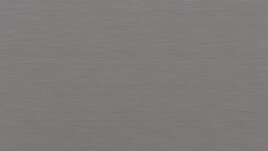
- QUARTZ-ZINC®: light grey, natural mineral look
- ANTHRA-ZINC®: deep anthracite grey
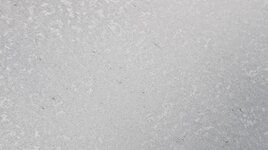
- AZENGAR®: subtly reflective light surface
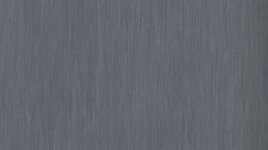
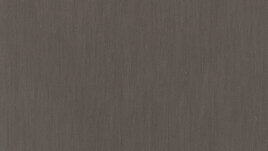
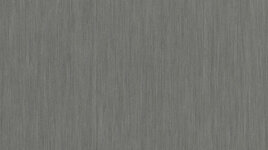
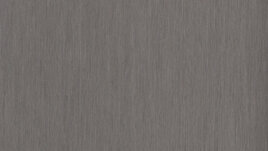
- PIGMENTO® Blue, Brown, Green and Red: colour pigments on a zinc base
Where have VMZINC zinc wall panels been used in India?
At the Shivkunj Residence in Juhu, Mumbai, SPASM Design Architects clad the facades with of ANTHRA-ZINC® interlocking profiles and perforated panels. The zinc skin forms a grid that encourages ventilation, filtered light and the play of shadows, and it was chosen for its resistance to the humidity and monsoons of the Indian coastline.
Need panel layouts or fixing details? Download the VMZINC technical guides or contact your local VMZINC zinc expert.
Technical content by VMZINC, VM Building Solutions.
Frequently asked questions about zinc wall panels
What are zinc wall panels?
Zinc wall panels are rolled zinc facade elements fixed to a ventilated framework to form a rainscreen. VMZINC interlocking panels are 0.8 mm or 1 mm thick, up to 3 m long, and connect along an interlocking groove that gives a recessed joint. See all VMZINC zinc facade and cladding systems.
How long do zinc wall panels last?
Rolled zinc has a life expectancy of more than 100 years, with a corrosion rate of about 1 µm per year. Its natural patina protects it without coatings, according to VMZINC durability data.
Can interlocking zinc panels be perforated?
Yes. Interlocking panels can be perforated to filter light and air, as on the ANTHRA-ZINC® facade of the Shivkunj Residence in Juhu, Mumbai.
What is the difference between interlocking and flat lock zinc panels?
Interlocking panels give a flat facade with recessed shadow joints. Flat lock zinc wall cladding panels give flush folded seams in a scale pattern. For strong vertical lines, choose a standing seam zinc facade or overlapping zinc panels.
Are zinc wall panels suitable for India's coastal and monsoon climate?
Yes. Zinc was chosen for the Mumbai coastline at Shivkunj Residence for its resistance to humidity, monsoons and wide temperature swings. Read how zinc cladding performs on coastal buildings.
Finishes
See all aspects-
 ANTHRA-ZINC
 -
 AZENGAR
 -
 PIGMENTO Blue
 -
 PIGMENTO Brown
 -
 PIGMENTO Green
 -
 PIGMENTO Red
 -
 QUARTZ-ZINC
Installation
See all our installation videos-
The panels are installed in a sequential order from top to bottom for horizontal panels. The upper edge of each panel is engaged into the lower edge of the panel above. The panels are mechanically attached using screws and/or the panel fixing clip that allows for thermal movement. The panels should be installed with the protective film in place.
Do you have a question or remark?
Please, leave us a message.
;
;